Commercial Cleaning Excellence
Your facility needs consistent cleaning schedules tailored to specific risks, daily throughput, allergen management, and regulatory visits, with auditable records confirming food safety measures, inspection compliance, and public health regulations. The information following give guidance on sanitation program requirements.
Important Highlights
- Brampton sanitation experts service restaurants, grocery departments, commissaries, warehouses, bakeries, schools, mobile vendors, and allergen-sensitive operations.
- Zone-based workflows clean high-touch surfaces, food-contact equipment, kitchens, floors, drains, restrooms, and storage areas for preventing cross-contamination.
- Logging of completion through swabs, inspections, and action records verifies certified providers have confirmed proper chemical concentration, suitability, and exposure duration.
- Optimal cleaning schedules account for threat, production rate, transitions, releases, and standards when allocating daily, recurring, and seasonal activities by section.
- Prioritize vendors displaying HACCP, sanitation knowledge, WHMIS instruction, liability, endorsements, color-coded instruments, and compliance-ready maintenance files.
Food Safety Cleaning Requirements for Brampton Venues
You must maintain food safety cleaning if your operation is covered by health inspections, food codes, or HACCP protocols. This covers eateries, dining areas, supply warehouses, retail departments, meat counters, fish departments, general stores, and facility-based kitchens.
You also need proper hygiene cleaning in distribution centers, food processing plants, freezer facilities, commercial bakeries, educational nutrition programs, event spaces, and catering hubs. Temporary and mobile establishments count too, including catering vehicles, market vendors, and seasonal stalls. If your staff handle ingredients, section prepared foods, heat finished items, or keep allergens stored, your facility needs established sanitation documentation. In Brampton, food safety isn't optional; it's part of regulatory, business, and safety compliance.
What Do Brampton Cleaning Experts Clean?
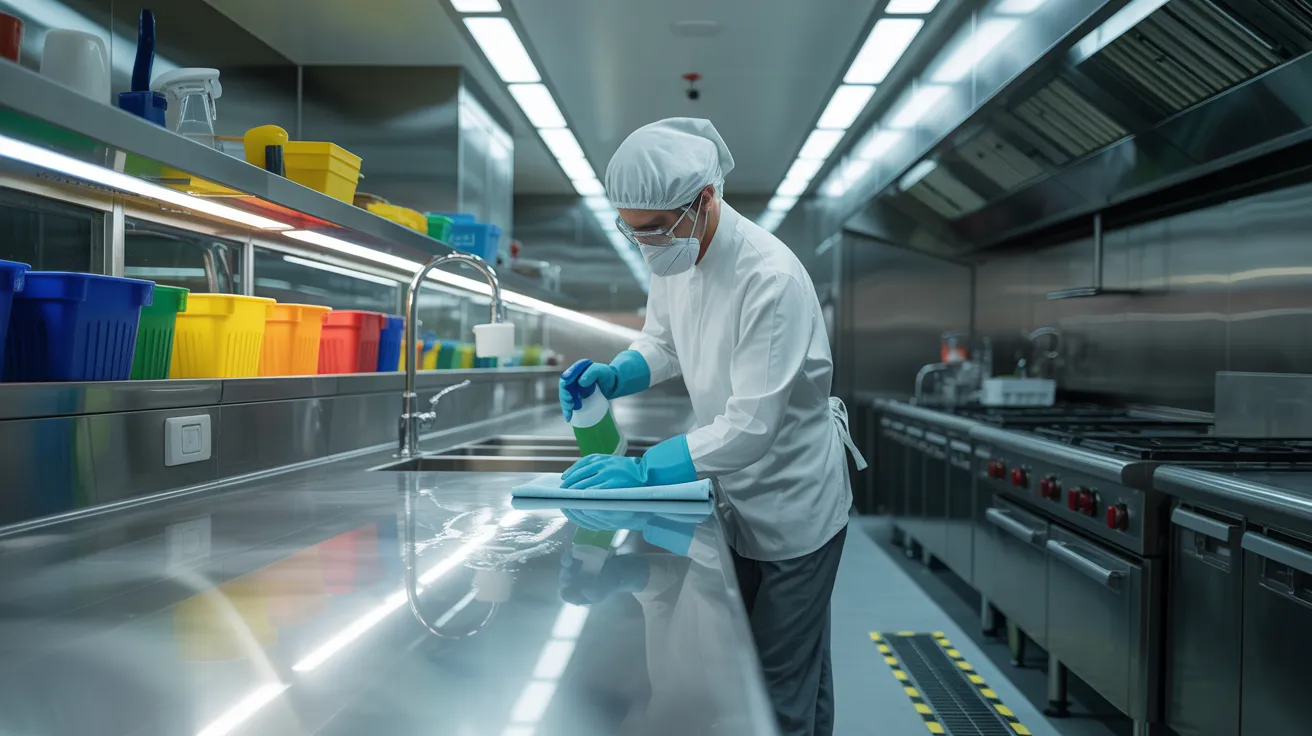
Professional cleaning teams specializing in Brampton disinfect high-contact surfaces, food preparation areas, floors, and sanitary facilities in compliance with food safety regulations. Focus on these locations occurs because they pose maximum contamination danger, injury hazards, and possible regulatory violations.
When you understand what they clean, you can verify that your facility's cleaning scope meets compliance and operational standards.
Sterilizing High-Touch Zones
implement a disinfection frequency
By changing towels, implementing unidirectional cleaning methods, and organizing cleaning supplies by zone, you maintain a documented, documented, and compliance-ready cleaning program.
Food Prep Areas, Flooring, and Sanitary Facilities
Expect Brampton cleaning experts to target kitchens, floors, and restrooms because each area carries unique food safety, accident prevention, and sanitation risks. In industrial kitchens, you need degreasing on cook lines, equipment exteriors, drains, prep surfaces, and splash zones to minimize contamination and pest pressure.
Floor care that is documented should equally be anticipated. Technicians clean and remove buildup from grout, tile, and vinyl flooring, then apply proper moisture management so you can reduce slip incidents and maintain code-compliant conditions. They also handle entry points where dampness and dirt enter the building.
For restroom sanitation, cleaners sanitize touchpoints, fixtures, partitions, dispensers, and waste containers, then replenish amenities and manage odor. They also maintain restaurant cleaning supply rooms where product storage, sink cleanliness, and drain systems impact daily sanitation standards and worker protection.
Food Safety Cleaning Significance for Brampton Businesses
Brampton businesses need to establish food-safe cleaning standards for meeting legal standards and obtaining approval. You also minimize bacterial spread through proper cleaning of food-preparation surfaces, appliances, and frequently-touched items. Most importantly, you safeguard public health by lowering the risk of foodborne illness in your facility.
Sanitary Standards Adherence
Since Brampton food companies must follow mandatory safety protocols, your cleaning procedures directly impacts your ability to meet health codes, protect diners, and eliminate regulatory penalties. You must maintain sanitized food contact points, recorded sanitation plans, appropriate product handling, and traceable training practices that align with municipal and provincial inspection expectations.
Failure to maintain cleaning standards results in notices, corrective directives, brand harm, and potential disruption during further inspections or compliance reviews.
Cross-Contamination Avoidance
Maintaining health code standards copyrights on your power to stop cross-contamination during everyday food preparation and sanitation. You need to partition uncooked items from finished dishes, sanitize prep surfaces between tasks, and position cleaning agents away from food surfaces. Explicit protocols lower contamination threats and reinforce steady regulatory adherence.
You should establish allergen separation to prevent major allergens from touching common work areas, storage bins, or tools. Use dedicated cutting boards, color-coded tools, and strict utensil labeling so staff don't mix items during preparation or service. Mandate washing hands following uncooked proteins, shellfish, egg items, or allergen products. Change cleaning rags frequently, and check disinfectant potency using test kits. When you train staff to follow these controls every shift, you build a more hygienic, secure workplace that satisfies Brampton's safety standards daily.
Community Health Safety
When sanitation efforts weaken, you don't only risk a failed inspection—you expand the chance of food contamination striking customers, staff, and the larger Brampton community. You also undermine your responsibility in protecting public health, especially in busy food facilities where pathogens travel quickly through surfaces, equipment, and touchpoints.
You need sanitation procedures that remove soils, disinfect properly, and confirm effectiveness. That requires adhering to contact times, using approved see this article disinfectants, recording cleaning times, and training staff to meet regulatory standards. These measures facilitate disease prevention by lowering microbial loads before they reach food or hands. In Brampton, rigorous cleaning protects vulnerable populations, limits outbreak potential, and helps you demonstrate proper care. When you clean to standard, you don't just meet regulations—you substantially decrease danger and support safer food service citywide.
How Does Cleaning Support Food Safety Compliance?
Rigorous cleaning routines promote food safety compliance by minimizing contamination hazards, controlling pathogen growth, and maintaining your facility's adherence to sanitation requirements under HACCP-based programs and public health regulations. You ensure that food-handling surfaces are visibly clean and microbiologically controlled, backing documented preventive controls and inspection readiness.
Cleaning strategies additionally amplify allergen prevention by removing residues that can lead to undeclared allergen exposure.
How Do You Arrange Commercial Cleaning Services?
surfaces can collect contamination
Schedule drains, vents, storage racks, and hard-to-reach equipment zones weekly or every month, relying on inspection data and sanitation records.
How Do You Choose Brampton Cleaning Experts?
Screen providers initially by their food hygiene standards—not budget alone. You need to verify that every company meets CFIA, public health, and HACCP standards for your operation. Demand insurance verification, WHMIS compliance, training records, and management systems. Evaluate technician knowledge of contamination dangers, chemical safety, and documented sanitation practices.
Additionally, you need to evaluate service dependability and accountability. Obtain references from Brampton food operations, then review service speed, corrective measures, and communication practices. Verify the company supports supplier audits and can deliver inspection-ready documentation when inspectors or external parties need proof. Verify equipment upkeep, colour-coded tools are applied correctly, and location-specific dangers are identified. A qualified provider ensures compliance, product quality, and your reputation.
What's covered in a Food Safety Cleaning Plan?
Put together a written plan that establishes every sanitation task, standard, and responsibility ahead of production commencement. You should specify cleaning intervals, permitted substances, dilution percentages, exposure times, instruments, and inspection methods for each sector, surface, and equipment. Make sure to include pre-operational inspections, corrective actions, and employee training requirements.
Your plan should also focus on contamination prevention controls, waste handling procedures, pest management measures, and written schedules for rest areas, drains, flooring, and food-contact surfaces. Detail how you'll keep raw and ready-to-eat processes separate, facilitate ingredient tracking, and maintain accurate allergen labeling through validated cleaning between product changes. You should assign accountability, keep signed records, and review results against regulatory standards, HACCP controls, and customer requirements. When gaps appear, modify procedures immediately and instruct staff.
Commonly Requested Inquiries
Will cleaning services manage overnight shifts at Brampton facilities?
Yes, you can book cleaning services to manage overnight shifts in Brampton facilities. You'll organize overnight sanitation around production schedules, access controls, and personnel needs. Providers typically establish nightshift procedures to reduce disruption, ensure compliance, and document completed tasks. You should verify response times, supervision, lockout procedures, and waste handling before beginning service. If you operate controlled environments, you'll also want cleaning records that support inspections and compliance verification.
Are emergency spill response solutions available from sanitation professionals?
Yes, you can locate Brampton cleaning professionals providing spill response services. They manage contamination, evaluate risks, isolate contamination, and begin swift decontamination to minimize exposure and prevent business disruption. You should confirm timeframes, credentials, PPE measures, and waste procedures. If your facility must meet compliance standards, pick a provider that documents events, follows procedures, and supports verification.
Do green disinfectants work safely on food preparation areas?
Absolutely, natural disinfectants prove to be secure for food-contact surfaces when you select disinfectants approved for food contact and meeting regulatory standards. You must confirm contact times, dilution ratios, and rinse protocols in advance of use. Botanical formulations lower chemical hazards, though you should gather demonstration of efficacy against harmful bacteria. For ensuring residue-free conditions, stick to precise manufacturer instructions and validate the sanitizer satisfies relevant food safety standards.
Do cleaning plans enable seasonal shifts?
Yes, you can adjust sanitation programs for seasonal production changes. You should adjust frequencies, staff levels, sanitizers, and testing procedures to match operational cycles while maintaining compliance standards. You'll reduce production downtime by planning sanitation around equipment transitions, peak volumes, and operational patterns. You should additionally update procedural documents, staff education, and monitoring protocols to reflect transient threats, novel allergens, or higher contamination levels. Ongoing evaluations preserve your plan functional.
Are professional cleaning companies offering staff training on sanitation best practices?
Yes, commercial cleaners often train your team on sanitation best practices. You receive employee instruction on proper chemical use, exposure periods, cross-contamination prevention, machine breakdown, and documentation. They generally follow instruction with HACCP, GMP, and CFIA or regional health department regulations. Many perform sanitation audits to verify compliance, spot deficiencies, and reinforce corrective actions. This helps you maintain consistent procedures, succeed in audits, and reduce food safety risks regularly.
Summary
Through engaging Brampton food safety and commercial cleaning specialists, you do far more than tidy—you ensure your facility for inspections and your procedures meet requirements. From kitchen spaces to processing areas, all clean areas and organized zones help prevent pest problems and prevent significant costs. Through booking service on suitable timelines and sticking to a solid cleaning plan, you safeguard your team, clients, and your good name. In a tightly controlled regulatory landscape, proper sanitation must be a priority—they represent good business practice.